


In the past I would have had to mail a drive, or fly my editor out to do on-site editing… If we were shipping drives they’d be a week behind, and the final deliverable would have been at least a week behind.
Nick Cahill
Cinematographer, NickCahill.com
Challenges:
⭕️ Slow transfer of high-res files to multiple destinations hundreds of miles away.
⭕️ Overcoming unreliable connectivity in remote locations – in this case, a 14,000-foot peak in Colorado’s Front Range.
⭕️ Time-consuming manual file transfer that slows down the video editing process.
⭕️ Complex transfer workflows that don’t scale without heavy IT involvement.
MASV Solutions:
✅ Browser-based MASV Portal file uploaders and a global accelerated network for fast transfers from anywhere.
✅ Multiconnect: Bonding multiple internet connections for accelerated uploads in remote locations.
✅ Automated, metadata enriched downloads to a specific folder on a local RAID using the Desktop App.
✅ An easy to use transfer tool that doesn’t require IT, backed by reliability features such as Transfer Priority.
Who Is Nick Cahill?
Nick Cahill is an outdoor filmmaker and photographer known for his dynamic storytelling and innovative visual style. His work spans documentaries, commercials, and branded content, often focusing on engaging narratives that blend creativity with authenticity. Cahill’s company specializes in producing high-quality video and images framed by rugged landscapes and adrenaline-fueled adventures, from Alaskan glaciers to the Colorado mountains.
“I like to think of myself as somebody who takes cameras where people don’t go,” Cahill explains.

What is the Pikes Peak International Hill Climb?
Pikes Peak isn’t just any event: It’s the nation’s second oldest automotive race, a high-stakes climb where drivers race the clock up a 12-mile, approximately 156-turn course to the summit at 14,000 feet.
Video recording the action requires a unique skillset. Cahill is no stranger to harsh conditions – he’s used to “hiking big mountains at altitude, wearing a big pack… being prepared for the weather, having your snacks, your water, everything like that.”
Having a mindset like this is crucial, because the logistics of filming Pikes Peak are, in Cahill’s words, “pretty advanced.”
The Challenge: Overcoming a Remote, Long-Distance Workflow
If I said you had to get massive amounts of 6K RAW footage from the top of a 14,000-foot mountain to an editor around 900 miles away for remote video production, how would you do it?
- Shipping drives daily is a logistical and financial nightmare.
- The public internet is mediocre at best.
- You’re a one-person band without a crew or an IT department on speed dial.
This was the challenge faced by cinematographer Nick Cahill and editor Chris Adams while filming the famous Pikes Peak International Hill Climb in 2025. It’s the definition of a high-pressure environment where long days, a remote location, and tight turnarounds are the norm.
“You have to get up at 2 or 2:30 in the morning… leaving the house by 3, getting in line to enter the gates by 3:30” before being dropped off in the backcountry by 4 a.m., Cahill explains.

Remote upload of high-res files to multiple destinations
After an eight or nine-hour day that starts before dawn, the last thing anyone wants is a complicated file transfer process.
- The biggest hurdle, however, was the 900 or so miles separating Cahill in Colorado from his editor, Adams, in Los Angeles – along with the 1.8 TB of event footage that needed to traverse that distance for video editing.
“In the past I would DIT my footage and then mail off a drive,” explains Cahill. “Or fly my editor out to do on-site editing.”
Shipping hard drives was a non-starter – waiting for a drive at the end of the event would have meant “an entire week later that we would have gotten our first clips,” Adams explains, adding that it also wouldn’t have made sense budget-wise.
Unreliable connectivity in remote locations
The public internet isn’t great for sending massive files as it is, but filming in remote locations often means dealing with a spotty internet connection and less-than-ideal internet speeds.
Filmmakers working on a remote mountaintop like Pikes Peak often experience connectivity problems due to the lack of nearby communication infrastructure, such as cell towers or broadband networks. The rugged terrain and elevation can obstruct wireless signals. And extreme weather conditions common in these areas can further disrupt signal strength and stability.
To send content at the pace the project required, they needed a solution that could rise above these challenges.

Time-consuming manual file transfer
The editing team needed a seamless solution that pumped content to their local RAID without the team wasting precious hours on manual file transfer or having to constantly double-check for new clips to download.
Complex transfer workflows that need heavy IT involvement
The grueling nature of the Pikes Peak project meant the team needed an easy-to-implement solution that doesn’t require a heavy IT lift, come with a complicated setup to navigate, or force users to deal with complex user interfaces.
Cahill and Adams also needed a reliable solution with tools that ensure the most valuable clips are given transfer priority and that all file packages arrive uncorrupted and in the same file structure in which they were sent.

MASV for Post Production
Automate your post-production workflow with MASV’s powerful file transfer and management.
The Solution: Accelerating Everything With A Fully Automated Workflow
Cahill and Adams soon found their remote production solution: An automated remote workflow built around MASV, turning a mountain of a challenge into a smooth ride to the finish line.
Cahill and Adams used MASV to create a fully automated remote video production setup that was fast, reliable, and required zero IT support.
Effortless, remote uploads to multiple destinations with MASV Portals
After each video shoot, Cahill backed up his high-quality video and uploaded it using a MASV Portal – a simple, branded upload page that takes less than five minutes to set up – and our accelerated global network ensured files arrived quickly and reliably.
- Uploaded content was transferred from Pikes Peak to L.A. on the MASV global accelerated network of 400-plus global servers.
- The Portal was configured to automatically send footage using the MASV Desktop App to a pair of RAID arrays in L.A.
“Having access to MASV and the ability to send files remotely is kind of a game changer,” Cahill explains.

Beating slow internet with channel bonding
Recording sessions in remote locations often mean dealing with a spotty internet connection and less-than-ideal internet speeds.
Cahill overcame this using MASV Multiconnect to bond his Airbnb’s Wi-Fi with his personal Starlink, combining their speeds to accelerate uploads and improve transfer reliability.
He likens the effect to “blowing air through a straw versus a garden hose versus a fire hose. The more you do, the more footage you can pump through.”
A seamless editing process with automated downloads
While Cahill uploaded in Colorado, Adams and his assistant used the MASV Desktop App in L.A. to automate downloads. The production team also quickly configured a file transfer automation to send all incoming files from Cahill’s Portal directly to their local RAID.
The experience for Adams was seamless. “No matter what I was working on, it just populated into a folder,” he explains, allowing him to easily track progress at the end of each day. “We were able to get a jumpstart on content coming in.
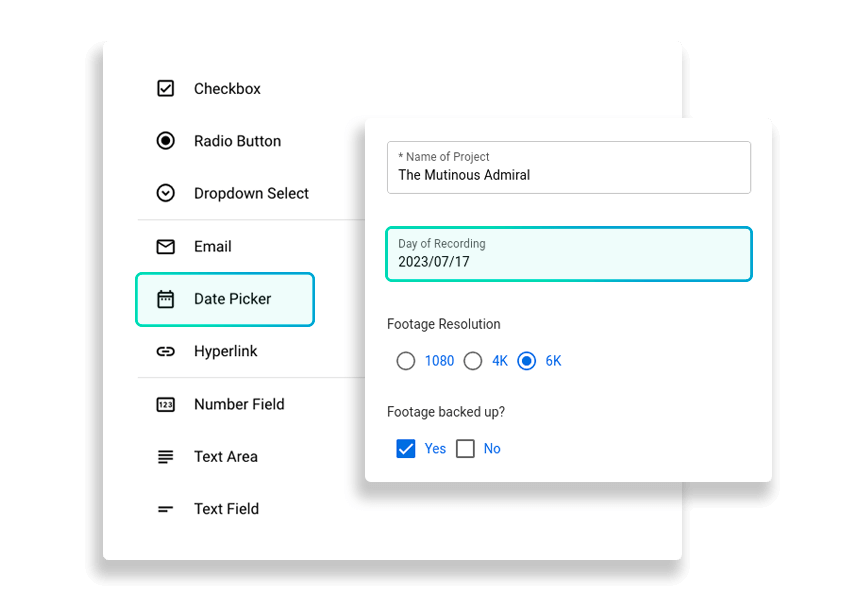
“I can see if I’ve received everything or if there’s still stuff downloading – it’s all right there,” Adams says, adding that Cahill also used Custom Forms to add metadata to each clip. “Nick started even labeling stuff as he sent it to me so it came in with an organized file structure.”
A reliable, easy-to-use transfer platform
MASV was simple for the team to set up and start using right away with pretty much zero learning curve – a must during a fast-paced, deadline-driven project with a ton of other potential points of failure besides file transfer.
Adams in L.A. says setting up the Desktop App on his workstation took all of five minutes. “It’s not complicated,” Adams says of setting up such an automated workflow with MASV. “If you can edit, you can figure out how to run MASV and it’ll streamline your work.”
For Cahill, it was as “easy as a drag and a drop,” a welcome simplicity when you’re “really tired… and having 2:30 a.m. wakeups for five days in a row.
“It was really, really nice to be able to transfer in one lump sum with a simple drag and drop, because then I can continue shooting for the rest of the day – or take a nap, because at 9 a.m. I’ve already had an eight- or nine-hour day.”
Tools like Transfer Priority allowed Cahill to prioritize which transfers got sent first, and in-flight MD5 checksum data integrity verification – which verifies that files arrive in the same order and condition in which they were sent – allowed him to send large amounts of data in the most efficient way possible.
The Result: Transforming Post-Production With a Simple, Powerful Automated Workflow
Cahill’s automated workflow powered by MASV transformed the editorial and post-production process while improving production quality.
- Reliably receiving footage each day allowed Adams to review shots and stay organized, ensuring that “by the time you get race day footage, everything else is really well organized.”
- When the final files came in, he was ready. That’s because “we’ve already seen all that footage, and we can start putting it together.”
- This immediate feedback loop also allowed for real-time adjustments during the filming process – a luxury that’s impossible when waiting a week for a hard drive.
- The workflow created a collaborative environment where editors could scrub footage and flag issues, giving Cahill the chance to course correct with camera settings in close to real-time, if needed.
“Because of budget constraints, it wouldn’t have made sense to send a hard drive every day,” Adams explains. “So it would have been an entire week later that we would have gotten our first clips. And it would be: ‘Here’s everything all at once, go for it.’”
“If we were shipping drives they’d be a week behind, and the final deliverable would have been at least a week behind,” adds Cahill.

The workflow developed by Cahill and Adams proves that with the right remote video production software, the immense logistical challenges of remote sports production can be solved. By leveraging MASV, the team eliminated delays, overcame technical hurdles, and built a more collaborative creative process.
Build Smoother Workflows
Try MASV today for fast and reliable file sharing that just works.