


The helpfulness and generosity from everyone at MASV has been amazing – from customer support to solution architects, everyone has been beyond helpful in getting us set up to get the most out of the system. The people at MASV have been equally impressive as the platform itself.
Ross Leviton
Director of Broadcast Operations & Media Technology, Miami HEAT
Challenges:
⭕️ Transferring large video packages – especially from remote contributors on the road, where connectivity can be unreliable – could take days using previous methods.
⭕️ Transfers often failed mid-transfer or arrived corrupted, requiring constant babysitting and manual restarts – delaying ingestion, editing, and publishing.
⭕️ Heavy file packages from videographers and photographers needed to be manually ingested in the middle of the night, or first thing in the morning.
⭕️ Incoming video footage needed to be manually sorted, tagged, and categorized, creating further delays and potential ingest errors.
MASV Solutions:
✅ The MASV accelerated private network and Multiconnect channel bonding via the Desktop App, combining multiple internet connections for greater throughput.
✅ Browser-based file upload Portals combined with a relentlessly reliable transfer methodology, infinite auto-retries from point of failure, and checksum verification.
✅ Automated transfer to an on-prem CatDV media asset manager (MAM) and Quantum storage, for hands-free data ingest at any time of day or night.
✅ Persistent file metadata enforced upon upload via dropdowns in a MASV Portal enables hands-free, error-free, real-time file organization.
Who is the Miami HEAT?
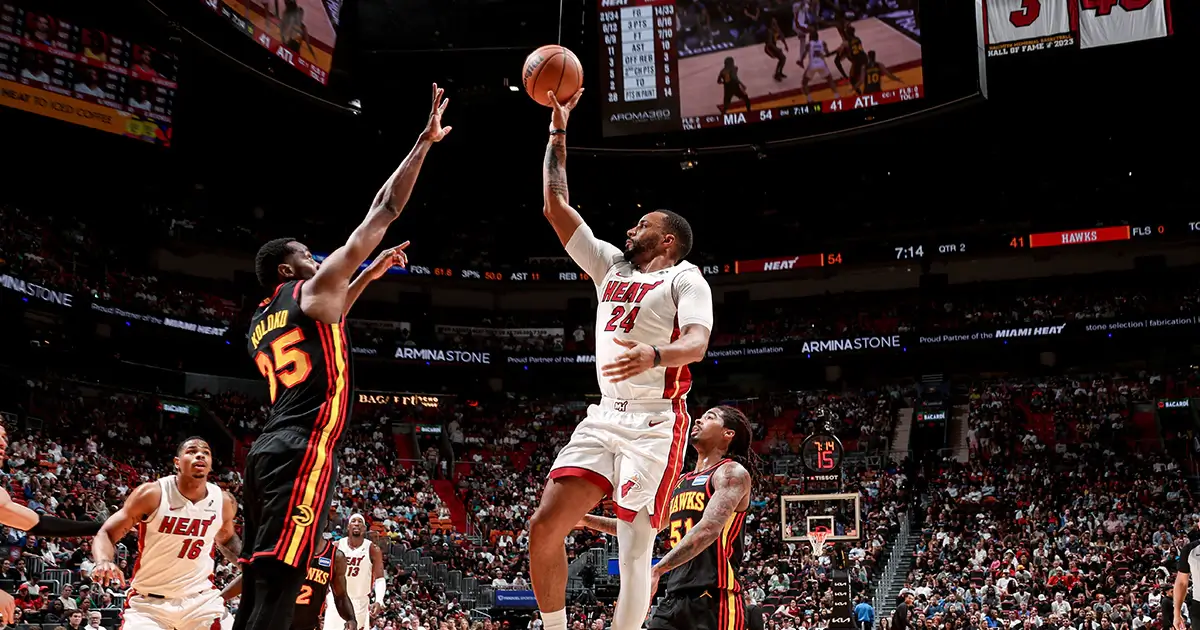
The Miami HEAT is one of the NBA’s most recognized franchises, competing out of Kaseya Center in Miami. It operates a sprawling media organization, producing massive volumes of high-resolution video and images, including game and practice footage, highlight packages, and broadcast deliverables. These assets must move quickly between remote teams to the club’s on-prem storage and beyond, often under extreme deadline pressure.
Ross Leviton is the HEAT’s Director of Broadcast Operations & Media Technology, and Erick Garcia is the organization’s Media Asset & Services Manager. Garcia says his professional motivation focuses on getting content where it needs to go in the most efficient way possible.
“My job is to ensure creative and broadcast teams can work faster without worrying about where files are, whether transfers completed, or if assets were ingested correctly,” he explains.

🏆 HEAT Highlights:
- On-prem MAM and storage system includes a 14 PB LTO library, 3 PB of online storage, and 25 Gbps bandwidth to every edit station.
- Generates ~1 TB of video and around 1,500 images per game. The video is destined for multiple use cases, from social media and broadcast to large video board displays and coaching and scouting analytics.
- Operates several media properties including social media accounts, YouTube, Kaseya Center productions, local broadcast and HEATv in-house production.
The Challenge: Receiving Heavy Media Files From Road Games Quickly and Reliably
The HEAT’s primary challenge was fast and reliable transfer of large video packages during road games, where uploaders were at the mercy of slow and unreliable hotel and arena internet – an issue that worsened considerably when transfers had to cover large distances.
Prior to MASV these transfers could take days and frequently failed mid‑transfer, creating downstream delays in ingesting, editing, and publishing. This unreliable transfer workflow also resulted in multiple versions of files living on individual drives and cloud storage accounts.
HEAT’s primary file transfer challenges included:
- Transfer delays during road games: “The key was getting that footage back in a timely manner, so everyone who needed it had access in our environment.”
- Frequent failed transfers: “Other tools consistently failed under real‑world conditions such as slow hotel internet, unstable connections, or hard file size limits.”
- A lack of automation: “I would get a WeTransfer link in my inbox at 3 a.m. – and when I get up I have to download and ingest that footage manually.”
- A lack of automated file organization: Late-night footage needed to be manually tagged and categorized prior to ingestion into the organization’s CatDV MAM and Quantum storage, creating extra work, delays, and frustration.
The Solution: Accelerated, Reliable Transfer From Anywhere – Even Areas With Low Connectivity
After IMT – the HEAT’s systems integrator – set up a MASV demo at NAB Show in Las Vegas, what immediately stood out about the solution was threefold:
- Multiconnect bonding technology, which combines multiple internet connections into a single high‑bandwidth transfer for greater resilience and throughput.
- The ability to reliably move very large files without limits. MASV has no limits on file package sizes and has built-in reliability features.
- A workflow centered around browser-based MASV upload Portals that’s built for media team workflows, not just general file sharing.
The organization mapped Portals to MASV Watch Folders, which are designated folders that perform automated transfers as soon as files are added. Folders were pointed toward the team’s on-prem systems, with metadata automatically added to ensure any file dropped in a Watch Folder is sent to the right on-prem destination.
It all adds up to faster, more reliable transfers of thousands of images, broadcast melts, and electronic news gathering melts from the road, to centralized storage, to whomever needs it.
Securely cutting transfer times by more than half with Multiconnect
Leviton says adding Multiconnect channel bonding to MASV’s accelerated private network was a “game changer” for HEAT’s remote transfer and ingest workflows, reducing transfer times from days to hours regardless of the area’s connectivity.
“We’ve got Ethernet, Wi-Fi and a hotspot bonded together, and our shooters can send 100 gigabytes in 10 minutes,” he adds. “They’re blown away by that, because traditionally they would have had to run that transfer all night.”
MASV’s out-of-the-box enterprise-grade security and compliance posture – including at-rest (AES-256) and in-flight (TLS 1.2+) encryption – keeps valuable unreleased content safe from data breaches during transfer.
Reliable transfers from remote locations via Portals
MASV solved HEAT’s problem of transfers constantly stalling, failing, or arriving corrupted due to unstable connections or file sizes that were too large:
- Browser-based, drag-and-drop MASV upload Portals can handle any size of file package, be accessed from any device, using any browser, and don’t require software installations or firewall updates.
- MASV stores all transfers temporarily in the cloud, so interrupted transfers always continue as soon as a connection is re-established.
- Checkpoint restart ensures that interrupted transfers resume from the point of failure, not from the beginning.
- Checksum verification ensures that all data arrives intact.
That’s a big deal for HEAT’s internal media teams, who can’t afford delays caused by late or corrupted content.
It’s also important to its remote videographers and photographers. “To be able to remove the headache of trying to transfer files and monitor file transfers, it frees them up to go do what they’re there to do,” Leviton says.
An automated content ingest pipeline
MASV Watch Folders are configured to send content uploaded to a Portal directly to a preconfigured destination in the organization’s on-prem systems, with no manual intervention required.
- Ingest folders are automatically created as soon as the NBA adds a game to the team’s schedule.
- As soon as content is uploaded via the Portal, the transfer to internal systems begins.
Garcia says implementing this automated workflow was easy and straightforward, and has helped scale the team’s effectiveness while ensuring a single source of truth for content.
“Internal teams and external stakeholders, such as photographers and the road crew, were productive almost immediately,” he explains. “With MASV, everything is happening in the background without manual intervention. It’s totally automated, and that’s really helped create a pipeline to get everything back into our system as fast as possible.”
Rich contextual metadata, so files always land in the right spot
HEAT also realizes the full benefits of MASV automation thanks to tools that make it easy for uploaders to add metadata to files when they’re being uploaded.
Uploaders simply indicate which game and content type they’re uploading through dropdown menus attached to the Portal – and the upload won’t work without adding that information.
This makes it easy for HEAT to enforce metadata collection, reducing upload errors that previously sent content to the wrong spot.
“They’re using the dropdown to select the game they’re sending footage back for, which creates a relative file path,” Leviton explains. “There’s no room for error – it’s going exactly to the right location in storage.”
The Result: Reducing Transfers From Days to Hours With Better Content Monetization
The benefits of the MASV-HEAT partnership include reduced transfer times from days to hours, fewer failed or partial transfers, less staff time spent troubleshooting, and much faster editorial turnaround.
- MASV has reduced the duration of road game file transfers from an average of around 12 hours per transfer (or multiple days, in some cases) to within a couple of hours – an average decrease of around 85%.
- Transfers from the road have become predictable and hands‑off, which Garcia says has reduced operational risk.
- MASV is now embedded in HEAT’s daily operations and has indirectly enabled HEAT to monetize its content by accelerating ingestion and access, distribution, and editorial turnaround, leading to increased reuse and publication speed.
“That improves our ability to capitalize on timely content,” Garcia adds. It has also led to reduced manual ingest labor, improved road-game efficiency, and the elimination of overnight manual transfer workflows.
According to Leviton, the benefits provided by MASV have only been eclipsed – potentially – by the responsiveness of the company’s customer service and engineering teams.
“The helpfulness and generosity from everyone at MASV has been amazing – from customer support to solution architects, everyone has been beyond helpful in getting us set up to get the most out of the system,” he says. “The people at MASV have been equally impressive as the platform itself.”
Build Smoother Workflows
Try MASV today for fast and reliable file sharing that just works.